
When students say they have checked an AI answer, what thinking have they done? A classroom routine for reading, debating and explaining their judgement.
In PISA 2025, eighty-one point seven per cent of students in the UAE reported assessing AI-generated information in their school lessons. The OECD average was sixty-two point six per cent. The UAE's average reading score was twenty-eight points below the OECD average. It had also improved by fifteen points since 2022. OECD results
That improvement matters. The OECD average fell over the same period. These national figures also don't tell us how well the students who reported AI-evaluation lessons could read or judge an AI answer.
They do leave me with a question about what happens in those lessons. When a student says they've checked an answer, what have they actually done?
What we ask students to do
I teach secondary science and lead digital learning and AI at a British school in Dubai. At school, we ask students to read the AI's answer and then debate it. They think critically about whether it's right or wrong, whether it contains bias and whether they accept it. There's reading involved, and then there's the thought that follows.
Students need to explain their decisions. They need to identify the claim they're accepting, say what supports it and consider what the answer might have left out. An answer can contain accurate facts and still give a misleading account of a topic. It can also be partly right and need qualification.
That requires subject knowledge as well as careful reading. A student checking a science explanation needs enough understanding of the topic to recognise whether the explanation makes sense. Knowing that AI can get things wrong gives them a reason to check. They still need the knowledge and practice to do it.
The PISA questionnaire records how often students report assessing AI-generated information in lessons. The headline includes those who say they do this sometimes, often or very often. It gives us information about their reported opportunities to practise. To understand what they're learning, we need to look at the decisions they make during the task.
Reading closely enough to question it
PISA's reading analysis gives us a reason to pay attention to that process. Across thirty-five OECD countries, the proportion classified as hasty readers rose from six point six per cent in 2018 to eleven point four per cent in 2025. Most of the increase came after 2022. OECD reading analysis
That classification comes from a three-minute task asking whether individual sentences make sense. These students answered unusually quickly and made multiple errors. The report says this behaviour may reflect difficulties with foundational reading skills, attention or engagement.
It doesn't establish that these students are more likely to believe a chatbot. My concern is what happens when a checking task asks students to compare an answer with a source. If they miss a condition in the source, they can reach the wrong conclusion even after opening the link and reading the relevant passage.
Take the report's own device-use findings. Moderate use for learning at school is associated with higher science scores than no use or very high use, on average across OECD countries. The analysis treats leisure use separately. A summary saying "screen time improves learning" would lose the purpose, setting and measured outcome, and turn an association into a claim about cause.
Finding similar words in the source wouldn't settle that check. We'd need to decide whether the summary preserved what the source actually said. That's the kind of reading and judgement I want students to practise.
Try this in fifteen minutes
Here's one way to make the thinking visible in a secondary classroom. It's a suggested activity to adapt to your subject.
Before the lesson, choose a short AI-generated paragraph about a topic the class knows, plus one or two short, reliable source extracts you've checked. Keep the reading manageable. Choose a claim students have enough subject knowledge to discuss. Include accurate answers in the task. Students should be able to explain why they accept those as well.
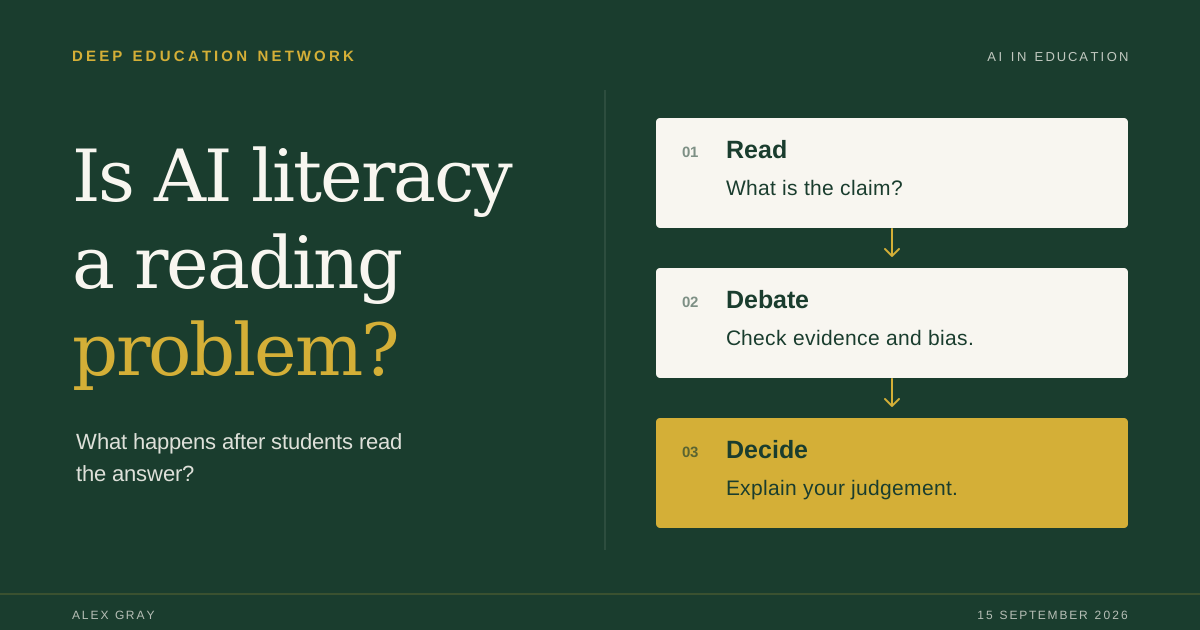
Read and identify the claim: two minutes.
Ask students to underline one claim in the AI answer and restate it in their own words. Before they evaluate it, check that they're discussing the same claim.
Check the evidence: four minutes.
Students read the source extracts and identify what supports or challenges the claim. Ask them to notice conditions, exceptions and limits. They should be able to explain the connection between the source and the claim, even when the wording is different.
Debate the answer: five minutes.
In pairs, students compare their interpretations. Is the answer accurate? Whose view does it present? What might be missing? What reason does each student have for accepting it? Ask them to explain any bias they identify, using the wording or omissions in the answer to support their judgement.
Write a decision: four minutes.
Each student writes two sentences: whether they accept, reject or would qualify the claim, followed by the evidence and reasoning behind that decision. If the sources don't settle it, they can say they don't have enough evidence yet and identify what else they'd need.
Collect those responses. Did they understand the claim? Look at whether their chosen evidence supports their decision and how they explain the connection. Agreement between partners is less useful than being able to see why each reached a decision.
Use the decision to plan the next lesson
A student who misreads the claim needs different support from one who understands it but draws an unsupported conclusion. Someone who identifies bias should be able to point to the wording or omission that led them there. Those responses give us something specific to teach next.
The exercise won't establish a student's overall AI literacy. It can show us where the reading, subject knowledge or reasoning needs more work on this task. That makes it useful when we're deciding whether students need another explanation, a closer reading of the source or more time to discuss the evidence.
Matthew Wemyss and I are running AI Literacy: Keep it human, an online workshop on Saturday 3 October, from 10:30 to 13:30 GST, on understanding AI, making decisions about its use and teaching with it.
When we ask students to check an AI answer, we should give them time to read, discuss and explain their decision. Their explanation is what lets us see whether they need help understanding the text, weighing the evidence or reconsidering the answer.

Stay in the Loop
Get practical insights about AI in education, new articles, and training updates delivered to your inbox.
No spam. Unsubscribe anytime.
Work With Alex
Looking for hands-on support with AI integration, curriculum design, or teacher professional development? Alex works with schools and organisations worldwide to build practical, evidence-informed approaches to education technology.