
GEMS proposes a new AI-supported school day. Before launch, families should be able to see how students learn to manage their work and who helps when they struggle.
GEMS is proposing a school day that combines AI-supported, self-paced study with around ninety minutes to two hours of live, teacher-led learning and a further two to three hours of enrichment. Its GR8 announcement on 8 October describes an initial “school within a school”, with the first soft launch planned for January 2027.
We need to look at what students would actually do during that day. More individual support, practical work and access to specialists could be valuable. So far, those are intended benefits. We can examine how the school plans to make them work before there are results to judge.
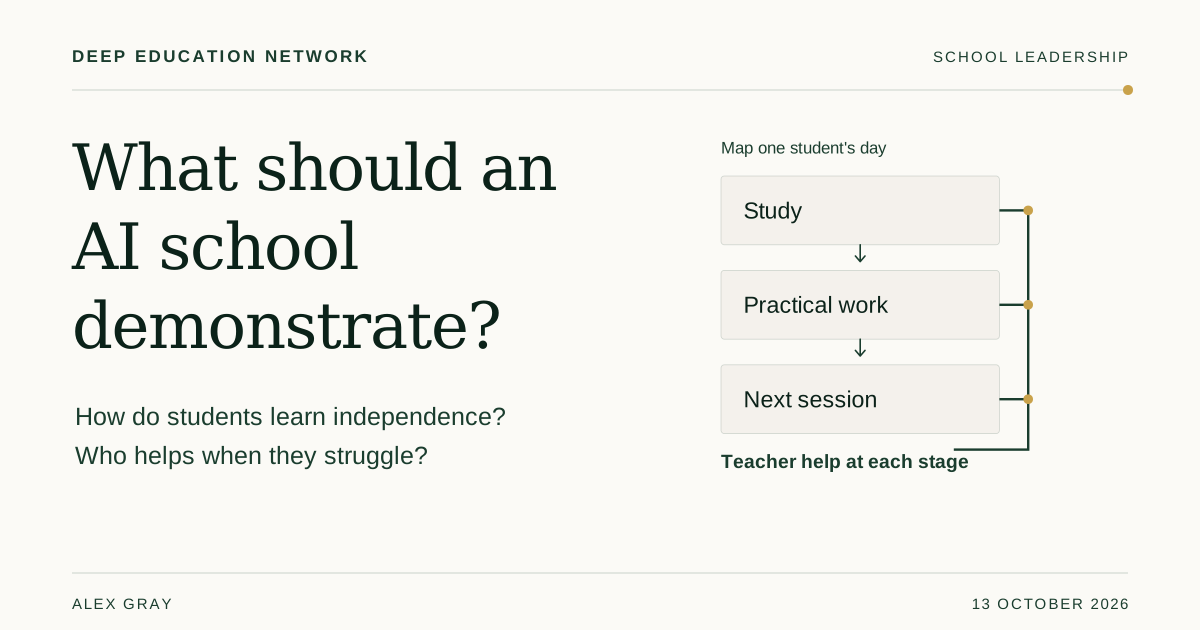
If I were reviewing that timetable, I'd want to know how students learn to manage their work and who helps when they struggle. Where does that teaching happen? How do students reach a teacher, and who changes the plan when they need more help? Those details would help a family decide whether the day could work for their child.
Independence needs teaching
GEMS says it expects GR8 to appeal to students ready for greater independence and ownership of learning. It's reasonable to design a pathway for a particular group. Families still need to know what being ready means, how the school decides that, and what happens if their child needs more support than expected.
There's also a difference between arriving with those habits and developing them at school. A student might complete tasks reliably but struggle to recognise a misunderstanding. Another might know the subject well and still need help deciding where to start.
The EEF has a resource on helping students plan, monitor and evaluate their learning. It recommends teaching these strategies directly, showing students how we use them and supporting them as they practise. Examples include setting realistic goals, thinking aloud and explaining the reasons for an approach.
The resource is about teaching. It doesn't establish that an AI-supported school model works. It helps us ask where students will learn those strategies, practise them and get feedback on using them.
Students working at their own pace still need teaching. They need to know how to choose a sensible next step and recognise when their current approach isn't helping.
Follow a student through the day
In a hypothetical science task, a student chooses an activity, completes the questions and receives a positive result from the learning system, but their explanation during practical work later shows a misunderstanding.
A teacher needs to see that misunderstanding and respond to it. They might revisit the explanation, show the student how to approach the problem and help them decide what to practise. The next independent session should reflect what the teacher found.
Another student repeatedly avoids the difficult activity. They keep working, but choose familiar material. Their time appears productive until someone looks at what they've been choosing.
This student may need a clearer goal, a smaller first step or someone to work alongside them while they begin. If it keeps happening, a teacher needs to talk with them about what's difficult and what would help.
These examples are made up; they aren't reports from GR8. They help us think through what a proposed day needs to allow for. Who notices the problem? What happens while a student waits for help? Who changes the plan for the next session?
Teacher support has to be available
GEMS says teachers will remain responsible for academic rigour and practical curriculum delivery, with more individual support informed by the adaptive system's data. Teachers need time to do that, and students need a way to reach them.
For example, several students might need individual help during the same session. Look at how teachers would respond, what the other students would do while they wait, and when more help would be available.
The EEF's scaffolding framework promotes increasingly independent use of learning strategies. It recommends offering the least help needed, through prompts, clues, modelling or correction as necessary. Teachers still have to choose the right help.
Students may need less help as they become more confident and capable. They still need to be able to get it when the work becomes harder or something changes in their lives.
A useful review before launch
Start with one subject. Map a student's proposed day, from the first task to a practical activity and the next learning session.
Use three possible responses to the work: the student understands it, gets stuck, or completes it while missing an important idea. For each, record:
- What evidence the teacher would see.
- Who decides what happens next.
- What help the student can access, and when.
- How the next task changes after that decision.
Then check whether the staffing and timetable make those responses possible. This is a proposed planning exercise. It can expose unanswered questions; it can't validate the model before students use it.
Once teaching begins, follow how the students change. Can they plan a task more sensibly, recognise a problem and use help more effectively over time? Examine their subject understanding alongside those habits. Include the students whose progress stalls and record how the school responds.
What families should be able to see
As the launch details emerge, families should be able to understand the curriculum and qualifications, how the school decides who joins, and how their child can get support. They should also know what happens if the pathway turns out to be a poor fit.
I can see the appeal of more practical work and a day that gives students more choice. Families also need to see how their child would learn to manage that choice, and who would help while they're learning. That's part of deciding whether the pathway suits them.

Stay in the Loop
Get practical insights about AI in education, new articles, and training updates delivered to your inbox.
No spam. Unsubscribe anytime.
Work With Alex
Looking for hands-on support with AI integration, curriculum design, or teacher professional development? Alex works with schools and organisations worldwide to build practical, evidence-informed approaches to education technology.