
Leon Furze shares insights on AI adoption in education, ethical considerations, and the power of differentiation with AI tools.
The International Classroom Podcast, hosted by Alex Gray, features insightful conversations with global leaders in education. In a recent episode, Alex welcomed Leon Furze, an international consultant, author, and speaker with extensive experience in education leadership and artificial intelligence (AI). The discussion focused on the role of AI in education and the ethical considerations that educators should be aware of.
Leon, a PhD student studying artificial intelligence in education, has witnessed the rapid adoption of AI tools in the education sector. One of the most notable recent developments is the launch of ChatGPT, an AI language model developed by OpenAI. This technology has garnered significant attention and widespread adoption, signalling a shift towards embracing AI in education.
Artificial Intelligence and Education
Furze began his journey with artificial intelligence in November last year, just two weeks before the launch of ChatGPT. He and his supervisor, Lucinda McKnight, who has been working in the field for years, were caught by surprise at how quickly AI became mainstream in education.
"One benefit of AI in education is the scale of adoption. I've never seen anything on this scale in education before in terms of a new technology coming out and people being so proactive in adopting it," says Furze.
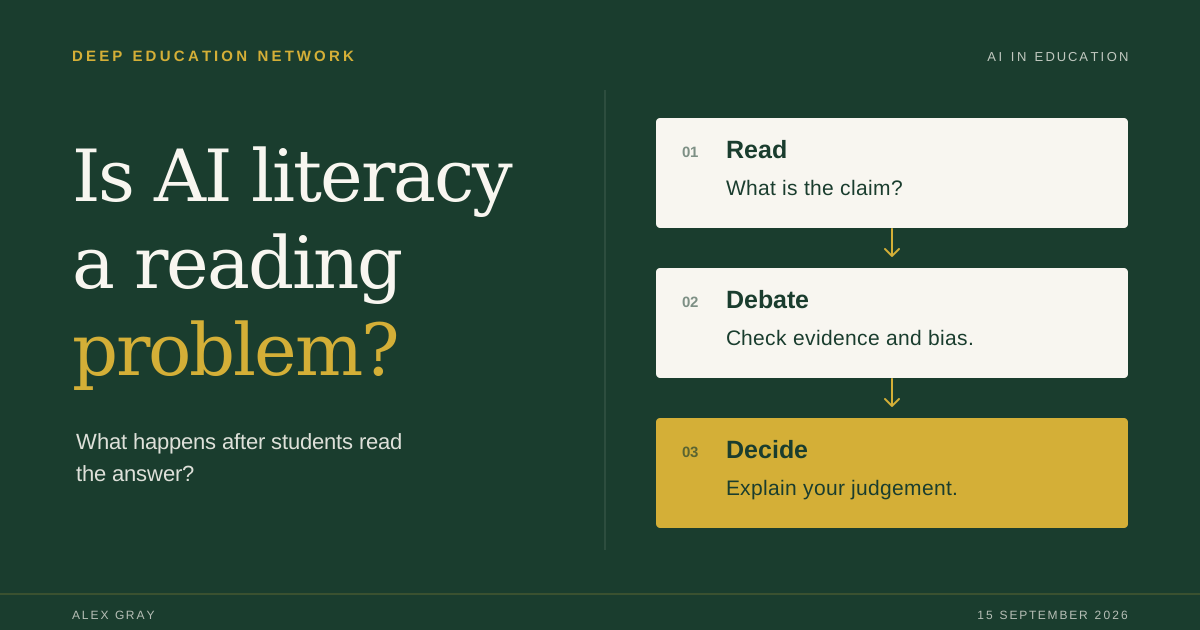
The sudden surge in AI adoption in education highlights the need for schools to offer professional development to teachers. Furze believes that starting with ChatGPT, which has a low barrier to entry, can be an excellent starting point for teachers to familiarise themselves with AI technologies.
The Ethical Considerations of AI
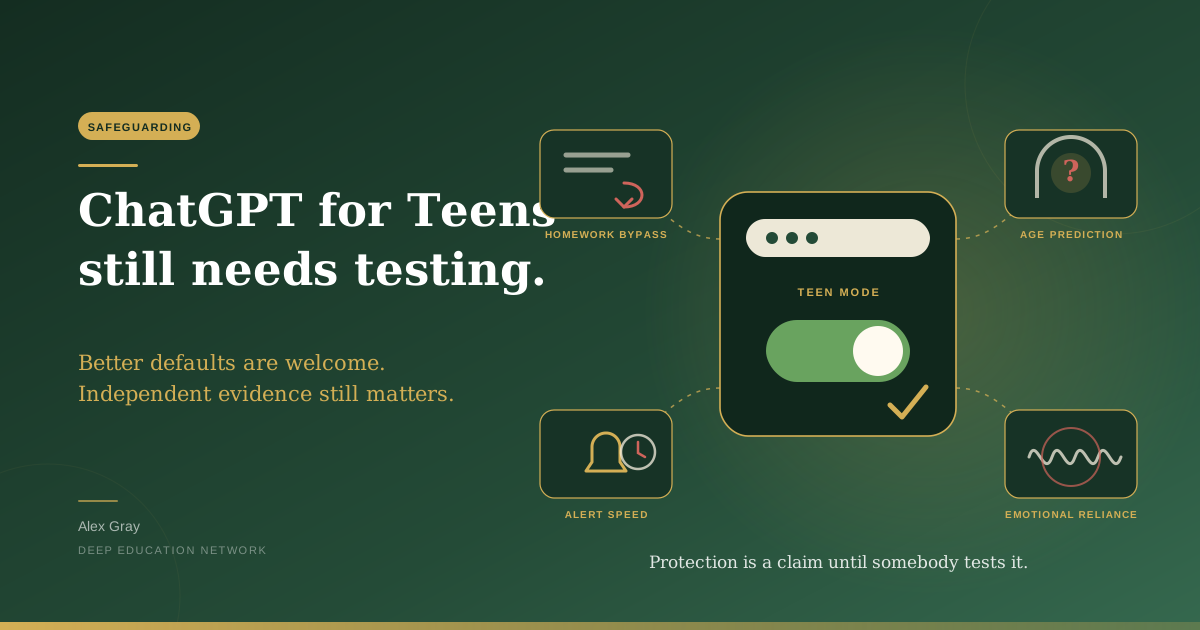
However, as AI becomes more popular in education, it is crucial to address the ethical implications. Furze recommends Kate Crawford's book "Atlas of AI" as a good starting point for those interested in understanding the ethical considerations of AI in education, including bias, discrimination, and data privacy.
Furze states, "We're going to see a lot of people capitalising on AI, a lot of people developing apps, a lot of developers using the GPT-3. We need to be really aware of the ethical aspects of these technologies and work with trusted organisations that have an explicit approach to limiting the risk for harm."
The Growing Divide and AI in Education
The widespread adoption of AI in education also highlights the potential for a growing divide between teachers and students who can use these technologies and those who cannot. Furze urges schools to be proactive in providing teachers with professional development opportunities to bridge this gap.
As AI technologies continue to advance rapidly, some experts have called for putting the brakes on large AI projects. However, Furze believes that AI can be harnessed to benefit education if integrated carefully and ethically.
Read - Musk, scientists call for halt to AI race sparked by ChatGPT
The Global Policy Landscape for AI in Education
The conversation with Furze also raises important questions about how education systems worldwide are responding to AI. Since this interview, the global policy landscape has evolved considerably. UNESCO's Guidance for Generative AI in Education and Research published in 2023 established a framework that many countries have since referenced when developing their own policies. The guidance emphasises the need to protect human agency, ensure inclusion and equity, and maintain transparency in how AI tools operate within educational settings.
In the Gulf region, where I work extensively with international schools, governments have been particularly proactive. The UAE's National Strategy for Artificial Intelligence positions the country as a global leader in AI adoption, and this ambition extends into education. Schools across Dubai and Abu Dhabi are increasingly expected to demonstrate how they are preparing students for an AI-augmented workforce, which in turn places new demands on teacher competency.
However, policy alone is insufficient. As Furze's insights suggest, the real challenge lies in translating high-level strategy into classroom practice. This requires sustained investment in teacher professional development -- not one-off training sessions, but ongoing programmes that build genuine AI literacy. The OECD's Digital Education Outlook 2023 makes this point forcefully, noting that "the gap between the potential of AI in education and its actual impact is largely a gap in teacher preparation."
Comparing Traditional and AI-Enhanced Teaching Approaches
To understand the practical implications of AI integration, it is helpful to compare how traditional and AI-enhanced approaches differ across key dimensions of teaching:
| Dimension | Traditional Approach | AI-Enhanced Approach |
|---|---|---|
| Differentiation | Teacher manually creates tiered resources | AI generates personalised content based on student data |
| Assessment feedback | Marked by teacher, often delayed | Instant formative feedback via AI tools |
| Resource creation | Teacher sources or creates all materials | AI assists in generating, adapting, and translating resources |
| Student engagement data | Observed informally or through periodic tests | Continuous data collection and pattern analysis |
| Workload | High administrative burden | Routine tasks automated, freeing time for teaching |
| Professional development | Scheduled sessions, often generic | Personalised, on-demand learning pathways |
| Accessibility | Depends on teacher expertise and available resources | AI can adapt content for diverse learning needs at scale |
This comparison is not intended to suggest that AI should replace traditional teaching methods. Rather, it illustrates how AI can augment what teachers already do well, allowing them to focus their expertise where it matters most -- in the human relationships and professional judgements that define great teaching.
The Power of Differentiation with AI
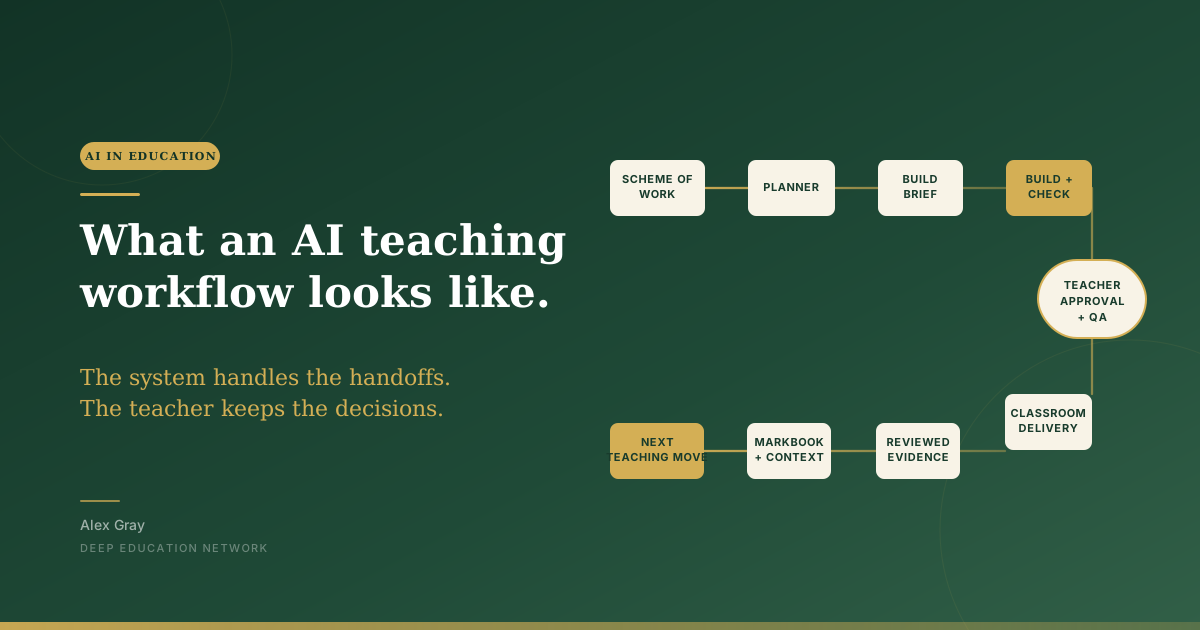
AI has the potential to revolutionise differentiation in education, enabling teachers to convert text to images or vice versa and provide personalised learning experiences for students. Furze envisions AI-powered tools that can help teachers create customised lessons based on students' individual needs, interests, and abilities.
Furze explains, "I'm really interested in the idea of adaptive teaching or differentiation. Being able to convert either image to text or text to image for students is going to be a powerful tool for teachers. Their ability to differentiate work using AI in general shouldn't be underestimated."
The Future of AI in Education
As AI continues to develop, the possibility of AI-powered chatbots tailored to specific subjects and educational levels in increasing. Imagine having chatbots that can provide students with up-to-date information, past exam papers, and other relevant resources.
As AI technologies advance, it is crucial for educators, policymakers, and AI developers to work together to ensure that AI is used ethically and responsibly in education. By embracing AI, educators can create more engaging, personalised, and effective learning experiences for students.
Building AI Literacy Across the Teaching Profession
One of the most pressing challenges that has emerged since this conversation with Furze is the question of how to build genuine AI literacy at scale across the teaching profession. It is not enough for a handful of early adopters to experiment with AI tools; the entire profession needs a baseline understanding of how these technologies work, what they can and cannot do, and how to evaluate their educational value.
In my work with schools across the Middle East and internationally, I have found that the most effective approach to building AI literacy is to embed it within existing professional development structures rather than treating it as a separate initiative. When AI is framed as a natural extension of good pedagogy -- a tool for differentiation, formative assessment, or resource creation -- teachers engage with it more readily than when it is presented as a standalone technological skill to master.
This aligns with Furze's recommendation to start with accessible tools like ChatGPT. The low barrier to entry means that teachers can begin experimenting immediately, building confidence through practical application rather than theoretical instruction. From there, schools can gradually introduce more sophisticated applications, such as AI-powered analytics platforms or adaptive learning systems, ensuring that teachers develop both the technical skills and the critical thinking needed to use these tools responsibly.
The goal is not to turn every teacher into an AI expert, but to ensure that every teacher has enough understanding to make informed decisions about when and how to use AI in their practice -- and, equally importantly, when not to.
Conclusion
In conclusion, Leon Furze's insights on artificial intelligence in education provide a well-rounded perspective on the potential benefits and challenges that AI presents. By prioritising professional development for teachers and addressing ethical concerns, schools can harness the power of AI to transform and enhance the educational experience for students. As we continue to navigate this new technological landscape, it is crucial to remain mindful of the importance of collaboration and responsible AI integration in order to create a brighter future for education. By embracing AI and using it wisely, we can empower educators to better support their students and create more engaging, personalised, and effective learning environments.
You can watch the full episode of the International Classroom on YouTube or listen on Spotify.
Filed under

Stay in the Loop
Get practical insights about AI in education, new articles, and training updates delivered to your inbox.
No spam. Unsubscribe anytime.
Work With Alex
Looking for hands-on support with AI integration, curriculum design, or teacher professional development? Alex works with schools and organisations worldwide to build practical, evidence-informed approaches to education technology.